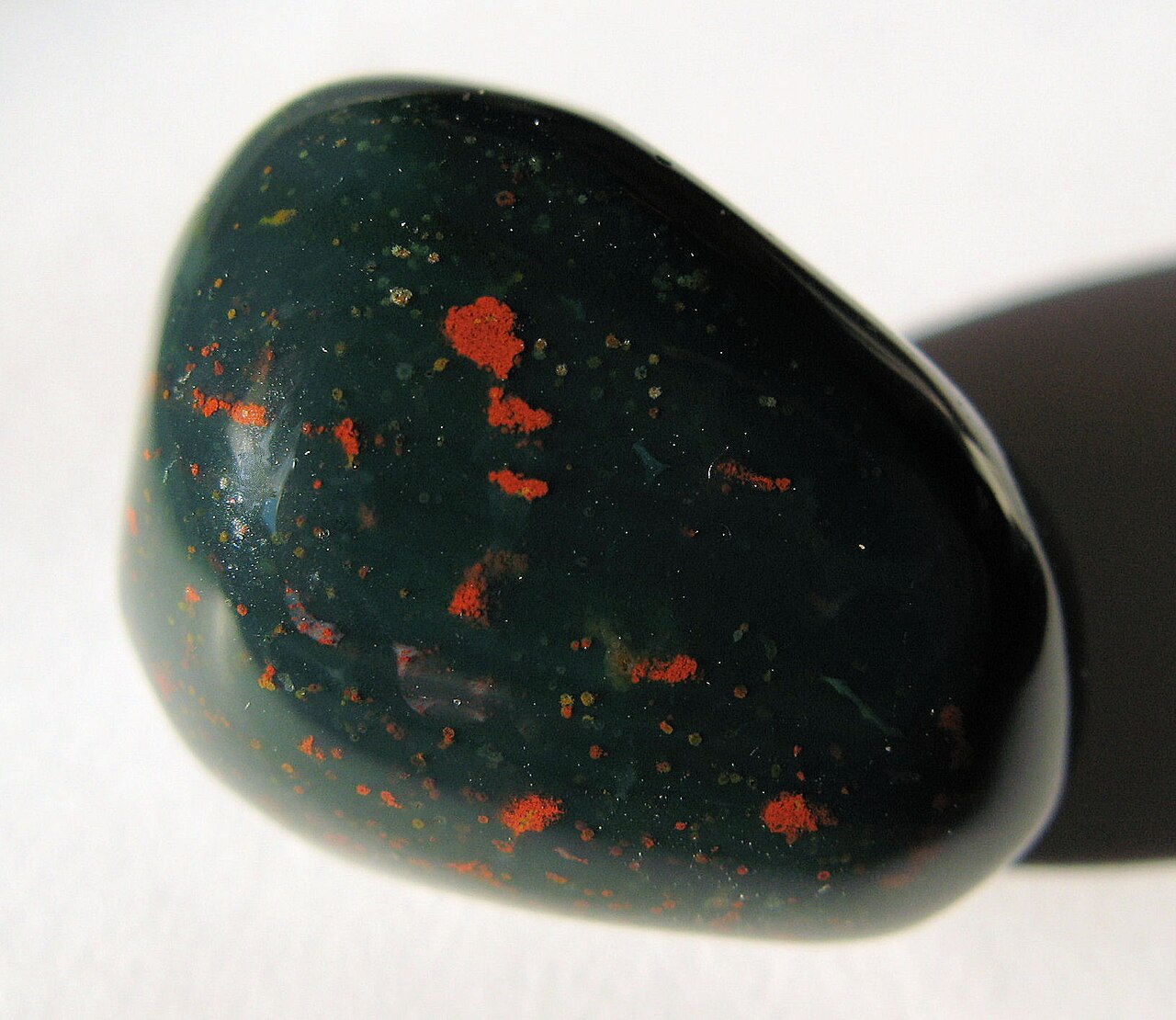
With its mesmerizing blend of deep green and vibrant red, the gemstone known as Bloodstone has captivated humanity for millennia. Often identified as a stunning variety of chalcedony, this stone’s unique appearance makes it instantly recognizable. If you've ever heard the description "Green Chalcedony With Spots Of Red Jasper," you're likely thinking of this powerful and historically significant gem. Far from being merely a beautiful rock, Bloodstone carries a rich tapestry of lore, ancient beliefs, and enduring symbolism, making it a revered object across diverse cultures and a treasured modern birthstone for March.
Unveiling the Enigma: What Exactly is Bloodstone?
At its core, Bloodstone is a dark green, opaque gemstone characterized by distinctive red, blood-like spots or streaks. Scientifically, it belongs to the chalcedony family, which is a cryptocrystalline form of quartz. This means its crystals are so fine they cannot be seen even under magnification. The vivid, deep green hue that forms the base of this stone is attributed to the presence of masses of chlorite, a group of silicate minerals.
The defining feature, and indeed the source of its evocative name, are the striking red inclusions. These spots are not, as some might instinctively guess, actual jasper, but rather iron oxide inclusions. While the common descriptive phrase "Green Chalcedony With Spots Of Red Jasper" paints a vivid picture for identification, it's important to understand the geological nuance: the red is iron oxide within a green chalcedony (or green jasper, which is itself a form of opaque chalcedony). A high-quality Bloodstone will ideally display a solid, rich green base with clearly visible, pronounced red speckles. However, modern specimens can often exhibit fewer or smaller red spots, sometimes appearing almost entirely green, yet still retaining its identity as Bloodstone or Heliotrope.
Its hardness rating of approximately 7 on the Mohs scale makes Bloodstone reasonably durable for jewelry and carvings, sharing the resilience characteristic of the quartz family. This robust nature, combined with its distinctive aesthetic, has contributed to its enduring popularity throughout history.
Nomenclature: Bloodstone, Heliotrope, and the Martyr's Stone
- Bloodstone: This name is the most straightforward, directly referencing the striking red spots that resemble droplets of blood against its dark green matrix.
- Heliotrope: An older, often used synonym, particularly in European historical texts. The term "heliotrope" comes from Greek, meaning "sun-turner." This name is often linked to an ancient belief that when placed in water, the stone could turn the sun's reflection red. Another interpretation suggests its appearance is similar to a setting sun reflected on the sea.
- Martyr's Stone: This poignant title originates from a profound Christian legend. It is believed that a piece of green jasper (Bloodstone) lay at the foot of Jesus Christ during his crucifixion, becoming stained with his blood. This powerful narrative elevated the stone to sacred status among Christians, leading to its widespread use in religious art and carvings depicting the crucifixion and other holy events. For a deeper dive into this spiritual connection, explore Martyr's Stone: Unveiling Bloodstone's Ancient History & Beliefs.
A Journey Through Time: Bloodstone's Rich History and Lore
Bloodstone's journey through human civilization spans at least two millennia, cementing its status as one of the most historically significant gemstones. Its presence is noted in both ancient Eastern and Western cultures, revered not just for its beauty, but for the potent properties attributed to it.
Ancient Traditions and Spiritual Significance
- Egyptian & Roman Use: Ancient Egyptians believed Bloodstone could grant courage and invisibility, while Roman soldiers carried it into battle as an amulet for protection and to staunch bleeding. Its reputation as a stone of vitality and valor made it a prized possession.
- Christian Lore: As the "Martyr's Stone," Bloodstone's significance in Christianity is profound. Beyond the crucifixion legend, its use in intricate carvings, often depicting religious scenes, speaks to its sacred esteem. This belief helped popularize the stone and imbued it with a sense of spiritual power.
- Indian Medicinal Practices: For centuries, Bloodstone has held a revered place in traditional Indian medicine, particularly within Ayurvedic practices. Finely powdered Bloodstone was, and in some traditions still is, incorporated into various herbal remedies. It was believed to possess purifying and healing properties, particularly related to blood-related ailments and detoxification.
Across these diverse cultures, a consistent thread emerges: Bloodstone has long been associated with strength, courage, purification, and the ability to ward off evil. It was often worn as an amulet or talisman, valued more for its perceived effectiveness than its aesthetic appeal, though its unique appearance undoubtedly contributed to its mystique.
More Than Just a Birthstone: Modern Applications and Value
While Bloodstone proudly serves as the modern birthstone for March, a designation it has held since 1912, its appeal extends far beyond a monthly affiliation. Its enduring symbolism of vitality and renewal makes it a fitting gemstone for the advent of spring, mirroring the reawakening of life.
Bloodstone in Modern Jewelry and Art
Today, Bloodstone continues to be a popular choice for a variety of jewelry items, including rings, pendants, earrings, and beads. Its opaque nature and striking color contrast lend themselves well to cabochon cuts, which highlight the stone's natural patterns and depth. It’s also favored by artisans for intricate carvings, sculptures, and decorative objects, echoing its historical use in religious art.
When selecting Bloodstone jewelry, look for pieces with a deep, consistent green color that provides a strong backdrop for the red spots. While specimens with abundant and clearly visible red spots are highly prized, remember that these can be rare. Even stones with subtle red flecks or those that are predominantly green still possess the characteristic energy and beauty of Bloodstone.
Metaphysical Properties and Practical Use
In contemporary spiritual and holistic practices, Bloodstone is highly regarded for its grounding and revitalizing energies. It's often associated with the root chakra, believed to promote stability, strength, and courage. Many modern practitioners utilize Bloodstone for:
- Boosting Energy and Vitality: It's thought to invigorate the wearer, enhancing physical strength and endurance, making it a popular choice for athletes or those needing a boost during challenging times.
- Protection and Grounding: Bloodstone is believed to create a protective shield against negative energies and influences, while also grounding the individual to the present moment.
- Purification and Detoxification: Echoing ancient beliefs, it's often used in practices aimed at cleansing and detoxifying the body and mind.
- Courage and Decision-Making: It is said to instill courage, help overcome fear, and promote selflessness, aiding in important decisions.
To integrate Bloodstone into your life, you might wear it as jewelry, carry a tumbled stone in your pocket, or place it in your workspace or meditation area. Meditating with Bloodstone can help foster a sense of calm strength and deepen your connection to your inner resilience.
Identifying and Caring for Your Green Chalcedony with Red Jasper
Recognizing authentic Bloodstone, or "Green Chalcedony With Spots Of Red Jasper," is relatively straightforward once you know what to look for, but proper care is essential to maintain its beauty.
Key Identification Features
- Color and Opacity: The primary color should be a deep, rich green, which is opaque (light does not pass through easily).
- Red Inclusions: Look for distinct red spots, flecks, or streaks. These iron oxide inclusions are the hallmark of Bloodstone. The vibrancy and distribution can vary significantly.
- Luster: Bloodstone typically has a waxy or vitreous (glassy) luster when polished.
- Hardness: With a Mohs hardness of 7, it's resistant to scratches from most common materials, but can be scratched by harder gemstones like sapphires or diamonds.
For more detailed identification tips and how to differentiate Bloodstone from similar-looking stones, refer to Bloodstone: Green Chalcedony with Red Spots Revealed.
Care and Maintenance Tips
Bloodstone is a durable stone, but it still requires some care to keep it looking its best:
- Cleaning: Use mild soap and lukewarm water with a soft brush or cloth. Avoid harsh chemicals, ultrasonic cleaners, and steam cleaners, as these can potentially damage the stone or alter its appearance.
- Storage: Store Bloodstone jewelry separately from harder gemstones to prevent scratching. A soft pouch or a separate compartment in a jewelry box is ideal.
- Avoid Harsh Impacts: While durable, sharp blows can still chip or crack the stone. Remove Bloodstone jewelry before engaging in activities where it might be hit.
- Metaphysical Cleansing: If you use Bloodstone for its energetic properties, consider cleansing and recharging it regularly. Methods include placing it under moonlight, smudging with sage, or burying it in earth for a short period.
Conclusion
The Bloodstone, a captivating "Green Chalcedony With Spots Of Red Jasper," stands as a testament to nature's artistry and humanity's enduring fascination with the Earth's treasures. From its ancient roots as a warrior's talisman and a sacred Christian relic to its modern role as a March birthstone and a source of grounding energy, Bloodstone's allure is undeniable. Its unique appearance, rich history, and powerful symbolism continue to inspire and protect, making it a truly timeless gem. Whether you are drawn to its stunning visual contrast, its storied past, or its believed metaphysical properties, Bloodstone offers a profound connection to strength, vitality, and renewal.