Bloodstone: Green Chalcedony with Red Spots Revealed
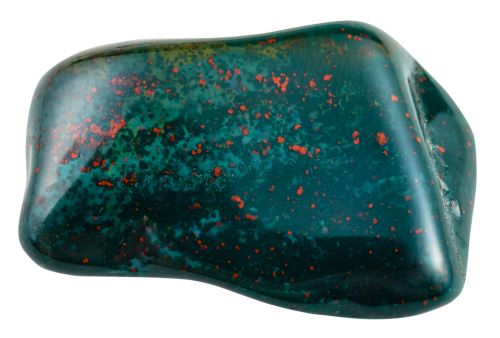
Often shrouded in ancient mystique and rich folklore, there's a gemstone that captivates with its distinctive appearance and compelling history. It's known by many names, but perhaps its most accurate and visually evocative description is green chalcedony with spots of red jasper. This is, of course, the magnificent Bloodstone, a mineral marvel that has intrigued gemologists, spiritualists, and even crossword puzzle enthusiasts for millennia. Far from being a simple, uniformly colored stone, Bloodstone presents a dramatic interplay of deep forest green punctuated by vibrant, often blood-like, crimson specks. This unique coloration is not merely an aesthetic quirk; it tells a geological story, hinting at the stone's fascinating composition and the conditions under which it formed.
For those encountering the term "Bloodstone" for the first time, the name itself can conjure images of a fiery red gem. Yet, as we will uncover, the truth is far more nuanced and visually striking. The dominant hue is undeniably green, a testament to its chalcedony roots, while the "blood" element refers specifically to those striking red inclusions. Join us as we delve into the world of Bloodstone, exploring its precise geological identity, its intriguing alternative names, its ancient legends, and its enduring relevance in the modern world.
Unveiling Bloodstone: The Gemstone's True Identity
At its core, Bloodstone is a unique variety of chalcedony, which itself is a cryptocrystalline form of quartz. This means that its crystalline structure is so fine-grained it can't be seen without powerful magnification. The characteristic deep green coloration of Bloodstone is primarily due to the presence of masses of chlorite, a group of phyllosilicate minerals. It's this chlorite content that gives the stone its verdant, often opaque, base hue – a rich canvas for its most distinctive feature: the red spots.
These crimson flecks, which give Bloodstone its evocative name, are caused by inclusions of iron oxides, particularly hematite. These iron-rich minerals manifest as small, often irregular, blood-red splashes or speckles distributed across the green body. When we speak of green chalcedony with spots of red jasper, we are referring to this precise geological composition. While "jasper" is sometimes used broadly to describe opaque chalcedony, in this context, the red spots specifically derive from iron oxide concentrations within the chalcedony matrix, giving them a jasper-like appearance.
As a member of the quartz family, Bloodstone boasts a respectable hardness of approximately 7 on the Mohs scale, making it durable enough for various jewelry applications. It typically exhibits a conchoidal fracture, a common characteristic of quartz minerals. While the ideal gem-quality Bloodstone would showcase a solid, vibrant green with clearly visible, well-defined red spots, such specimens have become increasingly rare in recent years. Many modern pieces may display only tiny, more subtle red flecks, or sometimes even none at all, making those vividly spotted examples particularly prized by collectors and enthusiasts.
More Than a Name: The Heliotrope Connection
Beyond its common moniker, Bloodstone carries an ancient alternative name that speaks volumes about its historical perception: Heliotrope. This term, derived from Greek, literally translates to "sun-turner" or "to turn towards the sun." The etymology offers a beautiful, poetic insight into how the ancients viewed this gem. Some theories suggest the name arose from the belief that the stone, when placed in water, could reflect the sun in a mesmerizing, blood-red hue, or perhaps even cause the sun to turn red, much like a sunset over the ocean. This evocative imagery perfectly encapsulates the stone's dual nature: the deep green reminiscent of the sea, punctuated by the fiery red of a setting sun.
The name Heliotrope was particularly prevalent among European authors and in works dating back to the 18th century and earlier. This historical usage underscores the gemstone's long-standing presence in various cultures and its consistent fascination across continents. Whether referred to as Bloodstone or Heliotrope, the identity of this green chalcedony with spots of red jasper remains consistent. It highlights how different cultures, through their unique lenses, found different ways to articulate the striking visual characteristics and perceived mystical properties of this remarkable stone.
A Stone of Legend and Lore: Bloodstone's Enduring Mystique
Bloodstone's striking appearance has naturally woven it into a rich tapestry of myths, legends, and spiritual beliefs spanning thousands of years. Its profound historical significance is evident in its widespread use across ancient civilizations in Asia and Western countries alike. The most enduring and widely known legend associated with Bloodstone comes from Christian tradition, where it is often revered as the "Martyr's Stone."
According to this poignant belief, a piece of green jasper (or Bloodstone) lay at the foot of the cross during the crucifixion of Jesus Christ. His blood, shed during the ordeal, is said to have stained the stone, giving rise to its distinctive red spots. This legend bestowed immense popularity and sacred status upon Bloodstone among Christians, who crafted stunning stone carvings depicting the crucifixion and other related events using this very gem. Such a powerful narrative transformed a mere mineral into a tangible symbol of sacrifice, courage, and divine connection, fostering a deep emotional and spiritual attachment to the stone.
But the spiritual reverence for Bloodstone extends beyond Christian lore. In ancient India, the stone has long been associated with powerful medicinal properties. Finely powdered Bloodstone was, and in some traditional practices still is, used in various traditional medicines, consumed in significant quantities due to beliefs in its healing capabilities. Across cultures, Bloodstone has been widely regarded as a stone of courage, vitality, and protection, believed to enhance physical strength, purify the blood, and ward off negative energies. Its ability to staunch bleeding, both literally and metaphorically, cemented its status as a potent talisman throughout history.
Bloodstone in Modern Times: From Crossword Clues to Birthstone
Even today, Bloodstone continues to hold a significant place, bridging the gap between ancient traditions and modern life. Its unique description as green chalcedony with spots of red jasper makes it a perfect candidate for general knowledge quizzes and crossword puzzles, where its precise identification is often the solution. Beyond intellectual pursuits, Bloodstone also enjoys prominence as a modern birthstone.
Since 1912, Bloodstone has been recognized as one of the birthstones for the month of March. This designation links it to new beginnings, vitality, and the burgeoning life of spring, perfectly aligning with its historical associations with courage and purification. For those born in March, wearing Bloodstone jewelry—be it a ring, pendant, or bracelet—is not just a fashion statement but a connection to a deeply rooted heritage of strength and protection.
When selecting Bloodstone, whether for jewelry or as a specimen, look for a vibrant, consistent green background. While large, prominent red spots are desirable, remember that modern specimens often feature smaller, more subtle flecks. The presence of these red spots, however small, is key to identifying genuine Bloodstone. As a relatively durable gem (Mohs 7), Bloodstone jewelry is suitable for everyday wear, though it's always wise to protect it from harsh impacts and extreme temperature changes. Cleaning is simple: use mild soap and warm water with a soft brush, and avoid harsh chemicals or ultrasonic cleaners.
Conclusion
The Bloodstone, truly a marvel of nature, offers far more than just aesthetic appeal. It is a gemstone steeped in history, rich with cultural significance, and uniquely identifiable as green chalcedony with spots of red jasper. From its ancient status as the "Martyr's Stone" and its use in traditional medicines to its modern role as a birthstone and a compelling crossword clue, Bloodstone continues to fascinate and inspire. Its deep green, speckled with vibrant red, tells a story of geological artistry and human belief, making it a powerful and enduring symbol of vitality, courage, and spiritual connection. Whether admired for its beauty, cherished for its legends, or simply recognized for its unique composition, Bloodstone remains a testament to the Earth's extraordinary treasures.